It's Time to Get Help

It's me, Jessalyn again! 👋 Today's post will be a little different. Unlike usual, I won't be sharing about my experience mentoring my buddy for today's session. 


👉👈

👉👈

👉👈


If you can recall, my session yesterday was quite troublesome. Actually, I felt like it was the most difficult session so far. My computer acted up on me, my buddy was super duper distracted and showed zero sign of interest. I had a hard time grasping his focus to stay on task and we barely made any progress. I was really patient with him, but I did feel internal frustration. I originally thought the flashcards would be effective in teaching new words, but I realized he would still say the words incorrectly even after saying them correctly in the flashcards. 

During the huddle yesterday, Margaret said that she noticed some of us are jumping
everywhere with the reading levels. She doesn't think it's possible to advance 3 or 4 levels over a span of 5 sessions, so she wanted an explanation. I only went
down
once in reading levels, so it wasn't directed to me. However, after the session ended, I debated whether I should go down 1 more level with Karl. He didn't make as many as 3 to 5 mistakes per page, but we just can't seem to get through the K book. Due to the fact that I'm so
lost in this program and that Margaret has witnessed me struggle many times already, I decided to assertively ask for help.

On Slack, a communication platform that LBN uses to communicate within the program, I privately messaged Margaret to express my concern and ask for advice. I explained what strategies I've already tried and the results of my attempts before requesting for suggestions based on her observations. 

After a few hours, Margaret emailed me a long message. In the email, she mentioned that she noticed that Karl would pronounce unfamiliar words incorrectly despite having gone over them already. She also acknowledged that it's usual for kids to take more time than allowed in a session. She recommended bringing him 1 letter (level) down to J, and introduced some strategies I can use to teach him. They are summarized below.


Strategies Margaret Introduced:

  1. Using Whiteboard & Text:

    • Use the Text function to write a new vocabulary several times (~5 times) on the screen

    • Write them in different colors, lower & upper case, large & small font

    • Have him follow your cursor to read each of the words then go faster (practice the oral part)

    • Type 4-5 sentences with the word in it

    • Ask him to give me a sentence, provide sentence starter if he's struggling

    • Have him read his sentence

  2. Put vocabs in a phrase in the flashcards

    • Ex. The GOALIE is big.

    • Make flashcards for him to practice at home

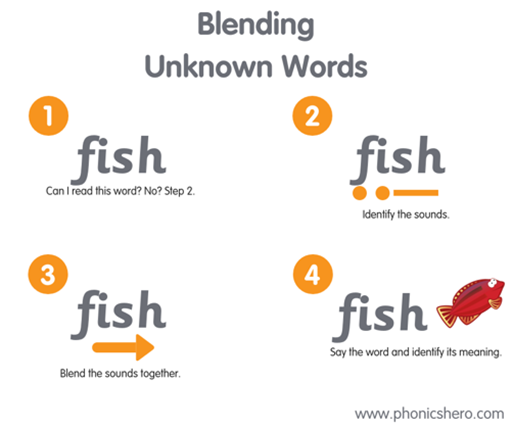
  3. Sound out new words by prolonging the first sound and adding the next sound until they blend together

    • Don't go letter by letter


The email had so much useful information that I had to read it over several times. I've never thought of using the whiteboard and text function in that way and I didn't realize that only learning a word and its definition isn't enough. Putting a new word in context allows the buddy to get a sense of how to use the word! The email even ended with Margaret thanking me for being a conscientious and dedicated mentor! After reviewing the email several times, I went to Zoom and made a new meeting with just myself. I practiced using the whiteboard function and switching the colours and fonts of the words. Next, I headed to my flashcards and made the necessary adjustments. As well, I thanked Margaret for her advice and asked further about the appropriate action to take when Karl still pronounces a word wrong even after having gone over it.  


To understand the objectives of these strategies better, I emailed her back with some more questions. I discovered that writing different forms of the same word on the whiteboard not only allows him to recognize the word despite its "appearance," but it also practices his oral part of learning. For the flashcards, like what I mentioned earlier, learning a list of words doesn't make sense to young readers. Putting it in some sort of context makes a lot more sense. Though Margaret might have found me annoying, I'm so glad that I took the initiative to contact and voice my concerns to someone who's willing and able to help. If I didn't ask for help, Karl and I might be stuck at the same stage for the rest of the program and make little to no progress. I learned that being passive does no good to any parties.

Being assertive is the key to being not only a good student, but also an effective mentor.

 

Comments